Sunday, October 31, 2010
Gretchen Orange County Pink Dress

On Saturday 17 and Sunday October 18 there was a new edition of the fair tractors of old Caussade . In this small French people gather every year many fans to meet, trade items, buy and sell, browse, ...
Leaving soon, on Saturday at six o'clock, we had more than 400km journey ahead and very excited. We stopped midway for breakfast and continued our way up Moutanban where we had booked two rooms in a quiet hotel for Saturday night. We left our bags and headed for the fair Caussade Tractomania. We arrived past one pm, we ate and toured the fair.
Although the day was cold and rainy, the fair was very lively, lots of people walking noting the various positions. You could find tractors, parts, books, toys, ... almost everything related to the world of agricultural machinery. Browsing through the narrow streets as surprised as almost scrapped tractors piled next to models very well preserved and restored.
Claim star was a steam engine of a boat that a lot of noise when it starts and took out a column of black smoke could be seen from afar. In Hall, a part of the bar and services, there were more jobs in magazines, toys, plates, ... i the organization.
cakes and we had lunch. We found some acquaintances with whom we share a few minutes Xarles on the most interesting that everyone had seen, and new acquisitions had been made.
Gradually it grew dark and the show closed until Sunday. We dined at a mall, fast food concession needed when traveling with two teenagers and went to the hotel to rest.
Sunday dawned a calm but very cold day. We take "le petit Dejun" in the hotel, picked up our little luggage and we headed back to Caussade. We started the ride this time by the board where folks gathered some fine examples of antique fire vehicles, vintage cars, minibuses and tractors. There was also a sample of craft work: they made rope, hats, flour, blacksmiths working ... And all accompanied by a typical band that played festive tunes known. We were a couple of hours to do some last minute shopping, take a bite and emprendrer the return trip. On Sunday morning l'influx of people was less, some tractors and ja were not many vendors had put fewer items in their jobs.
take this opportunity to give back, to the latest pictures and keep in memory all the details of the visit.


Friday, October 29, 2010
Sympathy To Cancer Card
Human Rights Forum and the Internet (12 Nov 2010)


First panel What are the rights of Internet users, including universal access to this electronic resource? (10 hrs.)
- Alejandro Pisanty (UNAM / @ apisanty)
- Ricci Diego Gonzalez (Universidad Iberoamericana)
- Jesus Robles Maloof (Mexican Academy of Human Rights / @ roblesmaloof)
- Daniel Gershenson (Alconsumidor / @ alconsumidor)
- Moderator: Jesús Ramírez Díaz (Senate
Second panel: What is the use of digital information and communication for the defense and promotion of human rights? (12 hrs.)
- Alejandro Juarez Zepeda (Ombudsgay / @ androphile)
- Ignacio Madrazo
- Stephanie Vela Barba (CIDE / @ samnbk)
- David Alberto Murillo (Friends against AIDS)
- Maria Ghersi (@ machixblue)
- Moderator: Jaime Rochin (CDHDF / @ Jaimerochin)
Third panel: How will exercise freedom of expression in the virtual public sphere? (15 hrs.)
- José Merino (ITAM / @ PPMerino)
- Elia Baltazar (Journalists' Network Multimedia)
- Gerardo Albarran (Press Room / @ saladeprensa)
- Elizabeth Palacios (CDHDF / @ elipalacios)
- Alejandra Ezeta (Citizens Media / @ ccenmedios)
- Moderator: Gerardo Sauri (CDHDF / @ gerardo_sauri)
Fourth panel: What is the Anti-Counterfeiting Trade Agreement (ACTA) and how it affects human rights? (17 hrs.)
- Pablo Aguilera (@ ptaguilera)
- León Felipe Sánchez (@ Lion05)
-
Representative - Adrian G. Mercado (Alestra)
- Emilio Saldaña (@ pizu)
- Marco Antonio Galván Jiménez (TELMEX)
- Chair: Alberto Escorza (Kicking Stones / @ pateandopiedras)
Thursday, October 28, 2010


Can Laough Mucic Cause Vertigo?
COMIC IN ENGLISH ON Iqbal Masih

CLICK HERE TO DOWNLOAD COMIC IN ENGLISH
Iqbal Masih
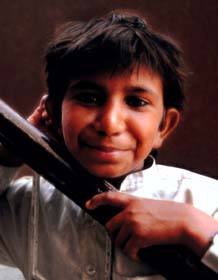
Iqbal Masih nació en 1982 en Pakistán. A los cuatro años de edad, su padre lo vendió como esclavo a un fabricante de alfombras por 600 rupias, unos 12 dólares, para pagar la boda de su hijo mayor. Desde ese momento, Iqbal fue obligado trabajar más de doce horas diarias encadenado a un telar y era sometido a constantes palizas.
A los 10 años de edad logró escapar de la fábrica pero las condiciones infrahumanas en las que vivió causaron serios estragos en su cuerpo. A los doce años de edad tenía la estatura y el peso de un niño de seis.
On April 16, 1995, Iqbal who was a member of the children's section of the Liberation Front of Forced Labor in Pakistan, was assassinated at the age of 12 years by the mafia of the tapestry, after many threats, businesses close which all workers were child slaves. His example was learned internationally, winning in Stockholm and Boston and dedicating the award to open a school, showing the placement of the cornerstone of its intention to become a lawyer to continue the fight against child slavery.
The April 16, 1995, Iqbal, the Catholic child in a Muslim majority country, participated in the Mass of Easter Sunday. That afternoon he went bike riding in his native village, near Lahore. Was shot to death and the mafia of carpet manufacturers was accused of the crime.
the day of his death, Iqbal had in his pocket a Bible and a book about Easter, with an image of Jesus. This Pakistani child is considered the symbol of the fight against child exploitation
In memory of Iqbal, a symbol of the 400 million child slaves of today want to claim the April 16th International Day Against Child Slavery
Cultural Movement Youth Outreach Christian and organize road proposal in Spain and parts of Latin America. If you want more information you can call:
91 373 40 86 or 34 if putting the flames from outside Spain.
in WWW.SOLIDARIDAD.NET Or contact
Avenida Monforte de Lemos 162, low. 28029 Madrid
Spain 
CLICK HERE TO DOWNLOAD COMIC IN ENGLISH
Iqbal Masih
Iqbal Masih nació en 1982 en Pakistán. A los cuatro años de edad, su padre lo vendió como esclavo a un fabricante de alfombras por 600 rupias, unos 12 dólares, para pagar la boda de su hijo mayor. Desde ese momento, Iqbal fue obligado trabajar más de doce horas diarias encadenado a un telar y era sometido a constantes palizas.
A los 10 años de edad logró escapar de la fábrica pero las condiciones infrahumanas en las que vivió causaron serios estragos en su cuerpo. A los doce años de edad tenía la estatura y el peso de un niño de seis.
On April 16, 1995, Iqbal who was a member of the children's section of the Liberation Front of Forced Labor in Pakistan, was assassinated at the age of 12 years by the mafia of the tapestry, after many threats, businesses close which all workers were child slaves. His example was learned internationally, winning in Stockholm and Boston and dedicating the award to open a school, showing the placement of the cornerstone of its intention to become a lawyer to continue the fight against child slavery.
The April 16, 1995, Iqbal, the Catholic child in a Muslim majority country, participated in the Mass of Easter Sunday. That afternoon he went bike riding in his native village, near Lahore. Was shot to death and the mafia of carpet manufacturers was accused of the crime.
the day of his death, Iqbal had in his pocket a Bible and a book about Easter, with an image of Jesus. This Pakistani child is considered the symbol of the fight against child exploitation
In memory of Iqbal, a symbol of the 400 million child slaves of today want to claim the April 16th International Day Against Child Slavery
Cultural Movement Youth Outreach Christian and organize road proposal in Spain and parts of Latin America. If you want more information you can call:
91 373 40 86 or 34 if putting the flames from outside Spain.
in WWW.SOLIDARIDAD.NET Or contact
Avenida Monforte de Lemos 162, low. 28029 Madrid
Monday, October 25, 2010
Swelling On Foot After Pedicure
Discussion "The Mexican reality in front of the UN Convention on the Rights of Persons with Disabilities"

has been much comment about the "lack of consistency" of the Mexican state relationship with the UN Convention on the Rights of Persons with Disabilities : one hand, we boast of being the country that drove the Convention, and that Mexico was the leading country in the process negotiations, we know who has spearheaded various activities and working groups internationally to promote the signature, ratification and implementation of the Convention , while in the domestic, is really very little has been done. We have not yet achieved, not even a new General Law for Persons with Disabilities, apparently, the matter has been politicized in such a way that questions the achievement of consensus in the short term. we Act of 2005, remains without a regulation. We continue to have an interpretative statement to one of the items crucial for compliance with the very spirit of the Convention (paragraph 2 of Article 12). The 2010 Census incorporated, yes, the guidelines of the Washington Group in designing the questionnaire, but the questions were poorly enforced, when they were applied: To our knowledge, and if property is already designated as a coordinating body CONADIS application Convention, not yet officially designated the official body for monitoring nationwide the Convention. addition, it has not been fulfilled in the way demanded by the Convention with the obligation to "consult closely with people with disabilities and organizations representing them, including children with disabilities" in all actions which are involved. This, by pointing out some of the key issues.

Sunday, October 24, 2010
What Can Be Given To A Newborn For Flem
ESPECULANDIA

BOOK CLICK HERE TO DOWNLOAD PDF FORMAT EB
SUMMARY OF CONTENTS
Defining Bubbles
new situation "?
Why will future speculation?
How much speculation?
1. First, migration
2. After Migration: volatility and high prices
3. Bluf!
4. Who wins and who loses?
5. big speculating
6. The very old food crisis
DEFINING
Specular: (Latin speculor,-ari, "observe", "investigate" or "search") In economics, speculation is the set of trade or financial aim at obtaining an economic benefit, based in price fluctuations. A speculator does not seek to enjoy rather than buying, but profit from price fluctuations. In a broad sense, any form of investment is speculative, but the term is usually limited to investment that does not matter any kind of commitment to the management of assets invested in , limiting the movement of capital.
In principle, this definition has little to do with this:
Food is a basic human right and a vital necessity . The right to adequate food is a human right, inherent in every person, "to have access to regular, permanent and free, is directly or through purchases, to food quantitative and qualitatively adequate and sufficient food corresponding to the cultural traditions of the population to which the consumer belongs, and which ensures a mental and physical, individual and collective, of anxieties, fulfilling and dignified. (FAO, Organization of the United Nations Food and Agriculture)
And even less with this:
Peasants, women and landless men, rural workers, indigenous peoples farmers and small and medium scale represent almost half the world population and are the backbone of food systems. Even well, their rights are systematically violated. The peasants have been evicted and displaced from their land to make way large plantations and industrial and infrastructure projects, residential and commercial . (Via Campesina)
But in the current capitalist food system, these three texts are closely linked .
The world price of staple foods and their fluctuations are defined far from the field, particularly in certain "markets" fund the principal of which is the market CME Chicago (USA). It sets the reference prices for cereals and oilseeds most used, and rebound, too major animal products because these are the main components of industrial and feed these in turn, are the main cost of production in intensive livestock . What happens within its walls is not safe, on the contrary, directly affects the power of the entire world ... 
BOOK CLICK HERE TO DOWNLOAD PDF FORMAT EB
SUMMARY OF CONTENTS
Defining Bubbles
new situation "?
Why will future speculation?
How much speculation?
1. First, migration
2. After Migration: volatility and high prices
3. Bluf!
4. Who wins and who loses?
5. big speculating
6. The very old food crisis
DEFINING
Specular: (Latin speculor,-ari, "observe", "investigate" or "search") In economics, speculation is the set of trade or financial aim at obtaining an economic benefit, based in price fluctuations. A speculator does not seek to enjoy rather than buying, but profit from price fluctuations. In a broad sense, any form of investment is speculative, but the term is usually limited to investment that does not matter any kind of commitment to the management of assets invested in , limiting the movement of capital.
In principle, this definition has little to do with this:
Food is a basic human right and a vital necessity . The right to adequate food is a human right, inherent in every person, "to have access to regular, permanent and free, is directly or through purchases, to food quantitative and qualitatively adequate and sufficient food corresponding to the cultural traditions of the population to which the consumer belongs, and which ensures a mental and physical, individual and collective, of anxieties, fulfilling and dignified. (FAO, Organization of the United Nations Food and Agriculture)
And even less with this:
Peasants, women and landless men, rural workers, indigenous peoples farmers and small and medium scale represent almost half the world population and are the backbone of food systems. Even well, their rights are systematically violated. The peasants have been evicted and displaced from their land to make way large plantations and industrial and infrastructure projects, residential and commercial . (Via Campesina)
But in the current capitalist food system, these three texts are closely linked .
The world price of staple foods and their fluctuations are defined far from the field, particularly in certain "markets" fund the principal of which is the market CME Chicago (USA). It sets the reference prices for cereals and oilseeds most used, and rebound, too major animal products because these are the main components of industrial and feed these in turn, are the main cost of production in intensive livestock . What happens within its walls is not safe, on the contrary, directly affects the power of the entire world ...
Poems About Microwaves
TRANSNATIONAL CORPORATIONS IN THE BANK PASS BY DEFENDANTS

Transnational Corporations in the dock: Human Rights Violations and the Possibilities of Accountability
Authors: Fernando Gallardo Prioste and Thiago Vieira Pinheiro Azevedo Hoshino
CONTENTS PRESENTATION
REFERENCE GUIDE
TRANSNATIONAL CORPORATIONS AND HUMAN RIGHTS: ACTIONS
conflicting interests TRANSNATIONAL LEGAL AND SENSE
of litigation and THE LIMITS OF LITIGATION AGAINST TRANSNATIONAL-BY ALEJANDRO TEITELBAUM
SUBSIDIES FOR ACTIONS Relationship between lawyers, social movements and victims
Corporate Information Types of human rights violations and disputes
network Definition of the objectives of the action
legal possibilities to make and maintain legal action
Analysis of various spaces and forms of intervention instruments
NATIONAL MECHANISMS Civil
Foreign Claims Act (ATCA)
Case 1: vs Wiwa. Royal Dutch Petroleum Company and Shell Transport Ltd.
Case 2: Aguinda vs. Texaco Inc. and Jota Ashanda Gabriel et al. vs. Texaco Inc.
Companies Act (Companies Act)
MECHANISMS
United Nations Organization (UNO)
International Labour Organization (ILO)
Case 1: Sindiquímica-PR vs. Fosfertil / Ultrafértil
Organization for Economic Cooperation and Development (OECD)
Case 1: Community vs Dongria Kondh. Vedanta Alumina Ltd.
Case 2: Cave vs Sipetrol. Shell
European Union (European Economic and Social Committee)
Case 1: Human Rights Foundation vs. Marangopoulos. Public Power Company
Organization of American States
Case 1: Mayagna Awas Vs Tingni. Nicaragua
MECHANISM OF FINANCIAL INSTITUTIONS
World Bank (International Development Association and the World Bank for Reconstruction and Development)
Case 1: Eastern vs. Parej communities. Coal India Ltd.

Transnational Corporations in the dock: Human Rights Violations and the Possibilities of Accountability
Authors: Fernando Gallardo Prioste and Thiago Vieira Pinheiro Azevedo Hoshino
CONTENTS PRESENTATION
REFERENCE GUIDE
TRANSNATIONAL CORPORATIONS AND HUMAN RIGHTS: ACTIONS
conflicting interests TRANSNATIONAL LEGAL AND SENSE
of litigation and THE LIMITS OF LITIGATION AGAINST TRANSNATIONAL-BY ALEJANDRO TEITELBAUM
SUBSIDIES FOR ACTIONS Relationship between lawyers, social movements and victims
Corporate Information Types of human rights violations and disputes
network Definition of the objectives of the action
legal possibilities to make and maintain legal action
Analysis of various spaces and forms of intervention instruments
NATIONAL MECHANISMS Civil
Foreign Claims Act (ATCA)
Case 1: vs Wiwa. Royal Dutch Petroleum Company and Shell Transport Ltd.
Case 2: Aguinda vs. Texaco Inc. and Jota Ashanda Gabriel et al. vs. Texaco Inc.
Companies Act (Companies Act)
MECHANISMS
United Nations Organization (UNO)
International Labour Organization (ILO)
Case 1: Sindiquímica-PR vs. Fosfertil / Ultrafértil
Organization for Economic Cooperation and Development (OECD)
Case 1: Community vs Dongria Kondh. Vedanta Alumina Ltd.
Case 2: Cave vs Sipetrol. Shell
European Union (European Economic and Social Committee)
Case 1: Human Rights Foundation vs. Marangopoulos. Public Power Company
Organization of American States
Case 1: Mayagna Awas Vs Tingni. Nicaragua
MECHANISM OF FINANCIAL INSTITUTIONS
World Bank (International Development Association and the World Bank for Reconstruction and Development)
Case 1: Eastern vs. Parej communities. Coal India Ltd.
World Bank (International Finance Corporation and Multilateral Investment Guarantee Agency investments)
Case 1: Federation of Rural vs. Minera Yanacocha SA
Case 2: Different groups vs. André Maggi Participacoes Ltda
Case 1: Federation of Rural vs. Minera Yanacocha SA
Case 2: Different groups vs. André Maggi Participacoes Ltda
Inter-American Development Bank (IDB)
Case 1: Movement of People Affected by Hydropower (MAB) vs. Tractebel Energia SA 66
NOTES REFERENCES
PRESENTATION
The issue of accountability of transnational corporations for violations of human rights, despite being relatively new, has a complex and comprehensive approach. Similarly, the challenges that exist to improve the instruments that allow legal actions against transnational validation depend on complex political context and the development of new national and international legal theory.
Thus, addressing national and international instruments and critically
the basis of experience, presupposes the development of complex material in terms of content
and simple in the way of exposure.
To account for this need the present work is essentially organized in two stages.
In the beginning, are presented general issues that can will fly a legal action against transnational
.
Case 1: Movement of People Affected by Hydropower (MAB) vs. Tractebel Energia SA 66
NOTES REFERENCES
PRESENTATION
This work was developed by the need to expose a wealth of knowledge and experience in the issue of accountability of transnational corporations for the violation of human rights, pointing out possible ways of intervention.
This guide aims to show some basics in the field of human rights, transnational corporations and litigation. It aims to signaling pathways that can take Organizations and social movements seeking to act against human rights violations committed by transnational corporations. In the paper are discussed some of the tools that can hold companies and are available in the national and international levels, thus contributing to the systematization of knowledge and experience about the accountability of TNCs for violations human rights.
We do not claim to be exhaustive or to make a conclusive assessment on
and space instruments against transnational litigation. The idea of \u200b\u200bwriting
material came from the results and proposals from various workshops held by Terra de Direitos and
the Rosa Luxemburg Stiftung, in conjunction with other entities and instances of participation in international discussions, such as Permanent Tribunal of Peoples.
This paper aims to contribute to civil society organizations to assess
in specific cases, legal action may be taken against transnational corporations.
REFERENCE GUIDE
The issue of accountability of transnational corporations for violations of human rights, despite being relatively new, has a complex and comprehensive approach. Similarly, the challenges that exist to improve the instruments that allow legal actions against transnational validation depend on complex political context and the development of new national and international legal theory.
Thus, addressing national and international instruments and critically
the basis of experience, presupposes the development of complex material in terms of content
and simple in the way of exposure.
To account for this need the present work is essentially organized in two stages.
In the beginning, are presented general issues that can will fly a legal action against transnational
.
The topic
Transnational Corporations and Human Rights: conflicting interests, we analyze the relationship between transnational activities, its economic and human rights violations. Thus, in order to obtain the maximum profit is, by nature, as opposed to on the human rights. Thus, we emphasize that the solution would be the construction of a new form of production, or other socio-economic model. The topic
Legal Action and Transnational Corporations, made some considerations about the appropriateness of taking legal actions against corporations.
To problematize the limits of legal intervention, we invite the professor Alejandro Teitelbaum to express their opinion on the Sense of Litigation and the Limits of Litigation Against Transnational
.
Later in the topic on Subsidies for legal action, present
some indications of elements that are important to understand the assessment of potential legal interventions against transnational corporations. We present basic information necessary to create legal strategies against transnational.
In a second step, the material specifically covered national mechanisms and international
which may have legal action against transnational.
mechanisms are analyzed as follows: ATCA (USA) Business Law (UK), UN,
ILO, OECD, OAS, World Bank - World Bank Inspection Panel, Ombudsman, IDB, European Union.
In each of these mechanisms in a didactic, are the main aspects that should be taken into consideration to file legal actions. The following table indicates which information will be presented in each of the subthemes of the mechanisms.
Transnational Corporations and Human Rights: conflicting interests, we analyze the relationship between transnational activities, its economic and human rights violations. Thus, in order to obtain the maximum profit is, by nature, as opposed to on the human rights. Thus, we emphasize that the solution would be the construction of a new form of production, or other socio-economic model. The topic
Legal Action and Transnational Corporations, made some considerations about the appropriateness of taking legal actions against corporations.
To problematize the limits of legal intervention, we invite the professor Alejandro Teitelbaum to express their opinion on the Sense of Litigation and the Limits of Litigation Against Transnational
.
Later in the topic on Subsidies for legal action, present
some indications of elements that are important to understand the assessment of potential legal interventions against transnational corporations. We present basic information necessary to create legal strategies against transnational.
In a second step, the material specifically covered national mechanisms and international
which may have legal action against transnational.
mechanisms are analyzed as follows: ATCA (USA) Business Law (UK), UN,
ILO, OECD, OAS, World Bank - World Bank Inspection Panel, Ombudsman, IDB, European Union.
In each of these mechanisms in a didactic, are the main aspects that should be taken into consideration to file legal actions. The following table indicates which information will be presented in each of the subthemes of the mechanisms.
Thursday, October 21, 2010
Apartment Application Letters
Digna Ochoa, retrospective to date


9 ° mournful tribute
This panel will address the current state of case, as the different perspectives we have of this champion of human rights .
Nine years after the death of Digna Ochoa have been several irregularities in the investigation authorities.
This panel will address the current state of case, as the different perspectives we have of this champion of human rights .
Participants:
Pilar Noriega García, human rights lawyer
Fernando Coronado Franco, consultant CDHDF
David Peña Rodríguez, human rights lawyer
Jesus Ochoa y Placido , president of the CDHDOYP
Gerardo Sauri Suárez, rapporteur of the CDHDF
Gerardo Sauri Suárez, rapporteur of the CDHDF
The date is Friday 22 October at 16:00 hrs.
Digna Ochoa auditorium
Human Rights Commission Federal District
1449 University Avenue, Col. Florida
Del. Álvaro Obregón, CP 01030
Mexico City
Cervical Mucus With Blood Mid Cylce
Forum: Alaíde Foppa, 30 years after her disappearance

My life is an exile without return. He had no home
my childhood wandering lost, no land
my exile. My life
ship sailed
in nostalgia.
lived by the sea
looking at the horizon to my house
ignored sail
thought one day, and this trip
left me in another port of departure.


My life is an exile without return. He had no home
my childhood wandering lost, no land
my exile. My life
ship sailed
in nostalgia.
lived by the sea
looking at the horizon to my house
ignored sail
thought one day, and this trip
left me in another port of departure.
Alaíde Foppa (1959)
[Excerpt from the poem "Exile" in Evening Although ]
Alaíde Foppa disappears in Guatemala City on 19 December 1980, the Guatemalan army hands when he went in search of the steps of their children. After losing her husband, Alfonso Solórzano, she decides to take a new life, to be closer to social needs and their roots, so that takes a serious mission as ambassador Justice for Guatemala and Central America. Choose to commit to their political cause from a different trench and a voice of their own. Steps had traveled vanguard of a nascent feminism, and plotted with his lyrics the paths of poetry and art criticism. Fraternal solidarity with refugees housed at home and more than one way, its history linked to indigenous brothers and sisters. His chair was sailing between Italian literature and sociology of women and his voice was broadcast on Radio UNAM.
Unfortunately, that gave impetus this mission did not last long. In his first assignment in the service of Guatemalan guerrilla movement, was located and abducted along with who was driving the car he was traveling, leaving the orphans to a mother of 94 years, three sons and four grandchildren who came known.
Thirty years later, in the silence lies the truth about her disappearance.
The purpose of this forum is to remember the name and face the woman who gave life to Alaíde Foppa and thirty years of his disappearance, think in retrospect on the situation of women's rights in particular and human rights in general. This, as a way to commemorate, in the name of freedom, the voices that have been turned off by violence, authoritarianism and intolerance.
Sunday, October 17, 2010
Little Mermaid Car Wash In Madison

CLICK HERE TO DOWNLOAD REPORT IN PDF FORMAT
LARGE AREAS AND WORKING CONDITIONS IN THE CLOTHING INDUSTRY
The workers who make clothes Carrefour in Bangladesh paid poverty wages between 21 and 34 euros
Clean Clothes Campaign, coordinated by the Setem in Spain, presented the report "Spend per box. Hypermarkets and working conditions in the garment industry. "
The report presents the results of research carried out during 2008 in 30 factories supplying Lidl, Aldi, Tesco, Wal-Mart and Carrefour in Thailand, Sri Lanka, Bangladesh and India. During the act of filing, Albert Sales, coordinator of the Clean Clothes Campaign in Catalonia and responsible for the report, explained that the conditions of women workers and workers of these factories "breaching the most fundamental conventions of the International Labour Organization and the root of this problem is the pressure exerted by large retailers over their suppliers, demanding price and delivery times impossible without detailed control actual production conditions. "
wages in poor countries is far from meeting basic needs and ensure a decent standard of living. According to the report's findings, in most countries producing clothes, the legal minimum wage or the average wage in the sector is about 50% of estimated should be a living wage.
Most of the 31 workplaces investigated (suppliers of Tesco, Wal-Mart, Carrefour, Aldi and Lidl) met the legal minimum wage. None of the salary allowed factories meet basic needs. The factories of Bangladesh paid a base salary of between 17 and 24 euros per month. Counting overtime, the workers were paid between 21 and 34 euros.
The real normal working day began at 8 am and ended between 7 and 10 pm seven days a week. None of the tested plants became a real-time less than 60 hours. Extra hours are not recorded to overcome the audits and to avoid having to pay all workers.
Regarding trade union rights, the four countries recognize freedom of association but only one of the 31 plants analyzed had union representation. In Bangladesh, a state of emergency remains suspended union activities for years. Sales
also believes that the trade policies of these corporate giants also have a strong impact on our cities. According to data compiled by the report, the three leading companies in the food marketing (Carrefour, Eroski and Mercadona) account for 40% of market share, and two of these companies are also distribution of textile products. The opening of a large area is an average loss of 276 jobs and closure of small shops in a radius of twelve miles.
Behind the manufacture of many products sold in supermarkets, "the working conditions are unacceptable and are being systematically violated the same standards that corporations provide their commitments and business ethics initiatives", warning Albert Sales.
The coordinator of the Clean Clothes Campaign, Albert Sales, reminiscent of transnational corporations that "your rhetoric regarding corporate social responsibility requires them to respond to the situations of poverty and exploitation experienced by people who make their products. "

Friday, October 15, 2010
Driver's Licence After Lasik Ontario
BOX UNIVERSAL VALUE AS DEMOCRACY

DESCAR CLICK HERE FOR FREE BOOK IN PDF FORMAT
Democracy as universal value
Amartya Sen
Speech in Congress for Democracy held in New Delhi (February 1999), taken from the Journal of Democracy, July 1999, vol. 10, No. 3, pp. 3-17, The John Hopkins University
In the summer of 1997, during an interview to a leading Japanese newspaper asked me what it was, from my point of view, the event century most relevant X X. I thought it was one of those rare questions that require reflection, given the large number of important events that have taken place in the last hundred years. European empires, particularly the British and French, who had so much weight in the nineteenth century, have disappeared. We have witnessed two world wars. We have witnessed the rise and fall of fascism and Nazism. The century saw the birth of communism and its fall-in the former Soviet bloc or radical transformation in China. We have also seen the shift of economic dominance of the West toward a new economic balance in Japan, East and Southeast Asia play a much more prominent. And although the region currently has some economic and financial problems, this does not invalidate the change in the balance of the global economy has developed over the past decades and, in the case of Japan, during almost the whole century. The last hundred years have not exactly been lacking in important events.
But ultimately I had no problem to choose the most prominent among the variety of events that have taken place during this period: the rise of democracy . It does not mean downplaying other events but I think in the future, when, look back and stop in the twentieth century, it is hard not to be granted priority to the establishment of democracy as the only acceptable form of government.
The idea of \u200b\u200bdemocracy, of course, had its origins in ancient Greece, more than two millennia. There were also attempts piecemeal democratization in other places, including India. But I really was in ancient Greece where it took shape and actually implemented, though on a limited scale, before collapsing and giving way to more authoritarian forms of government and asymmetric. Nothing similar occurred elsewhere. It took
long time to emerge as we know it today. There were various events that allowed its gradual and ultimately successful establishment as an effective system of government, since the signing of the Magna Carta in 1215 to universal suffrage in Europe and North America in the twentieth century, through the French and American revolutions century XIX. However, only in the twentieth century became established as "normal" form of government is entitled to any nation, whether in Europe, America, Asia or Africa.
The idea of \u200b\u200bdemocracy as a universal commitment is quite new and, in essence, a product of the twentieth century. The rebels who imposed restrictions the King of England by the Magna Carta saw their needs as completely local. In contrast, American independence and the French revolutionaries gave a great impetus to the realization that democracy is necessary as the overall system. The practical aim of his demands, however, did not exceed the local, being confined to the two sides of the North Atlantic and on the basis of economic history, social and political life of the region.
Throughout the nineteenth century it was common for democratic theorists to ask whether this or that country "was ready for democracy." This way of thinking
not change until the twentieth century, with the recognition that the question itself was wrong: a country does not have to be ready for democracy, but rather be prepared through democracy. The change was crucial, for it was extending the potential scope of democracy to billions of people, whatever their history, culture or economic status.
was also in this century when it was finally agreed that the "adult suffrage for all" meant all, including women. When in January 1999 I had the opportunity to meet Ruth Dreyfuss, President of Switzerland and a woman of remarkable intellectual level, I remembered that as recently as a quarter-century women in that country or even have the right to vote. Finally we come to recognize that the application of the concept of universality, such as mercy, should not be selective.
Without doubt, the universal aspiration for democracy has to face challenges take many forms and come from many different directions. In fact, part of this essay is about it, because it analyzed the affirmation of democracy as a universal value and the controversy surrounding this claim. But before that analysis is clearly necessary to understand in what sense of democracy has become the main belief of the contemporary world. 

DESCAR CLICK HERE FOR FREE BOOK IN PDF FORMAT
Democracy as universal value
Amartya Sen
Speech in Congress for Democracy held in New Delhi (February 1999), taken from the Journal of Democracy, July 1999, vol. 10, No. 3, pp. 3-17, The John Hopkins University
In the summer of 1997, during an interview to a leading Japanese newspaper asked me what it was, from my point of view, the event century most relevant X X. I thought it was one of those rare questions that require reflection, given the large number of important events that have taken place in the last hundred years. European empires, particularly the British and French, who had so much weight in the nineteenth century, have disappeared. We have witnessed two world wars. We have witnessed the rise and fall of fascism and Nazism. The century saw the birth of communism and its fall-in the former Soviet bloc or radical transformation in China. We have also seen the shift of economic dominance of the West toward a new economic balance in Japan, East and Southeast Asia play a much more prominent. And although the region currently has some economic and financial problems, this does not invalidate the change in the balance of the global economy has developed over the past decades and, in the case of Japan, during almost the whole century. The last hundred years have not exactly been lacking in important events.
But ultimately I had no problem to choose the most prominent among the variety of events that have taken place during this period: the rise of democracy . It does not mean downplaying other events but I think in the future, when, look back and stop in the twentieth century, it is hard not to be granted priority to the establishment of democracy as the only acceptable form of government.
The idea of \u200b\u200bdemocracy, of course, had its origins in ancient Greece, more than two millennia. There were also attempts piecemeal democratization in other places, including India. But I really was in ancient Greece where it took shape and actually implemented, though on a limited scale, before collapsing and giving way to more authoritarian forms of government and asymmetric. Nothing similar occurred elsewhere. It took
long time to emerge as we know it today. There were various events that allowed its gradual and ultimately successful establishment as an effective system of government, since the signing of the Magna Carta in 1215 to universal suffrage in Europe and North America in the twentieth century, through the French and American revolutions century XIX. However, only in the twentieth century became established as "normal" form of government is entitled to any nation, whether in Europe, America, Asia or Africa.
The idea of \u200b\u200bdemocracy as a universal commitment is quite new and, in essence, a product of the twentieth century. The rebels who imposed restrictions the King of England by the Magna Carta saw their needs as completely local. In contrast, American independence and the French revolutionaries gave a great impetus to the realization that democracy is necessary as the overall system. The practical aim of his demands, however, did not exceed the local, being confined to the two sides of the North Atlantic and on the basis of economic history, social and political life of the region.
Throughout the nineteenth century it was common for democratic theorists to ask whether this or that country "was ready for democracy." This way of thinking
not change until the twentieth century, with the recognition that the question itself was wrong: a country does not have to be ready for democracy, but rather be prepared through democracy. The change was crucial, for it was extending the potential scope of democracy to billions of people, whatever their history, culture or economic status.
was also in this century when it was finally agreed that the "adult suffrage for all" meant all, including women. When in January 1999 I had the opportunity to meet Ruth Dreyfuss, President of Switzerland and a woman of remarkable intellectual level, I remembered that as recently as a quarter-century women in that country or even have the right to vote. Finally we come to recognize that the application of the concept of universality, such as mercy, should not be selective.
Without doubt, the universal aspiration for democracy has to face challenges take many forms and come from many different directions. In fact, part of this essay is about it, because it analyzed the affirmation of democracy as a universal value and the controversy surrounding this claim. But before that analysis is clearly necessary to understand in what sense of democracy has become the main belief of the contemporary world.
Wednesday, October 13, 2010
Instruction To Make An Orange
meeting Caussade tractors. REPAIR OF A RADIATOR
October 2nd On Saturday we met again at the home of James Tobey and his wife Rosalie and his family welcomed us with great kindness in their farmhouse near Manresa. Gave us a wonderful lunch of local produce. Later, enjoy seeing their old tractors and pulling their old engines, ready for the pilgrimage to the shrine as last year.
This year the star was this old tractor that he built one of the fields closest to the ship. This is a McCormick-Deering manufactured between 1923 to 1942. After a short set-up will see that it works great:


October 2nd On Saturday we met again at the home of James Tobey and his wife Rosalie and his family welcomed us with great kindness in their farmhouse near Manresa. Gave us a wonderful lunch of local produce. Later, enjoy seeing their old tractors and pulling their old engines, ready for the pilgrimage to the shrine as last year.
This year the star was this old tractor that he built one of the fields closest to the ship. This is a McCormick-Deering manufactured between 1923 to 1942. After a short set-up will see that it works great:


Thursday, October 7, 2010
Free Doujin Moe Member Account
EDITH STEIN: A tireless seeker of TRUTH

Edith Stein, a thinker for our time
BOOK IN PDF FORMAT DOWNLOAD
Edith Stein: a path to the truth
BOOK IN PDF FORMAT DOWNLOAD
EDITH STEIN: A tireless seeker of TRUTH
Pope John Paul II canonized on 11 October 1998 at the age of Blessed Edith Stein. Edith was born Catholic, but Jewish, in Breslau, then German city, and now Polish Wroclaw name in 1891. The youngest of a large family, and he suddenly lost his father just two years later. Her mother took over the family business with strong wood and education of their children.
Her mother instilled a high code of ethics to their children: Edith learned to never lose some virtues: honesty, work ethic of sacrifice, loyalty ... But although he was educated in a clearly Jewish faith was rather shallow. At ten he learned of the death of a beloved uncle, and ended up hearing about the cause: suicide, after the collapse of his business. Attended the funeral. "The rabbi began the eulogy. I had heard other funeral prayers. They were a summary of the life of the deceased, which highlights all the good things had for life, removing the pain of the family and without this it would receive no comfort. Finally, with solemn and pompous voice, the rabbi said: "If the body turns to dust, the spirit returns to God who is who gave it." But behind all this, there was a belief in personal survival and a return to be after death.
I had an entirely different impression when after many years attended a Catholic funeral cult, for the first time. It was the funeral of a famous scholar. But nothing is said in the eulogy of his merits, not the name that had been in the world. Only mandated the Mercy God her poor soul by the name. Certainly, that consolidates and serenantes were the words of the liturgy that accompanied the dead to eternity. "Edith knew a lot more suicides, happened when hopes were crumbling earth who until then seemed full of love for life.
The virtues learned at home, with a deep and awaken intelligence, Edith made progress in the academic world, despite the prejudices against women and Jews in Germany that rigid. excelled in school, and went to Göttingen to study philosophy. There he met Husserl, and, along with many others, was dazzled by the new phenomenology. "The Logical Investigations (Husserl) were impressed, especially because they were a radical departure from the Kantian critical idealism and neo-Kantian idealism stamp.'s Work was seen as a" new scholasticism. "(...) All young phenomenologists were determined a realistic. " Edith, in philosophy, sought the truth. But at the same time, the absorbed intensive work, and left no time for consideration of other things, in fact, had no faith.
God was preparing her head, but also other aspects that would discover, among others, contact with the pain. In 1914 war suddenly appeared. Many friends Edith went to the front. She could not keep still, and signed up as a volunteer nurse. She was sent to an Austrian hospital. Attended soldiers with typhus, with injuries and other ailments. Contact with death impressed. After he witnessed one of the first, "when I ordered the few things I noticed was the dead man had a note on your calendar. It was a prayer to ask to stay alive. This prayer had given his wife. It broke my heart. I realized, just then, which meant that death humanely. But I could not stay there. " After the formalities, it became a refuge in the ceaseless activity. Edith Medal of Valor for his work in the hospital.
After leaving the hospital, followed Husserl in Freiburg, and worked as his assistant. Ordered and collected the work of the teacher, but without a clear future in that position, decided to leave Husserl and try to aspire to a university chair. He could not get by being a woman, and had to settle with the direction of a private school.
Some conversions of friends and some scenes of faith that could see were impressed Edith. He began reading books on Christianity and the New Testament. One day she took a book at random from a friend's house converts. Proved to be the autobiography "The Life-de Santa Teresa Jesus. Completely absorbed him. When it was over, startled, said: "This is the truth!". Immediately, he bought a catechism and a missal. He soon appeared in the nearest parish asking you baptized immediately. Demonstrated good understanding of the faith, but had to run some errands, and was baptized on January 1, 1922, under the name of Teresa Edwig.
hardest thing was coming to the talks was just telling his family. Edith was a pride for his mother. That is why it collapsed and began to mourn when her daughter was back in his lap and said: "Mother, I'm Catholic." Edith consoled as he could, and even accompanied him to the synagogue. His mother never recovered from the blow, he considered it a betrayal, but was forced to admit, watching his daughter, "I have not seen anyone pray like Edith."
still find it more costly to accept the decision of becoming a Carmelite nun Edith barefoot. It was a considered decision for years, which became reality in 1934. Cast their ballots in April 1935 in Cologne. She became Sister Benedicta of the Cross.
While all this happens, the scene in Germany is becoming increasingly hostile to Jews, from Hitler came to power in 1933. In 1939, the Carmelite sisters of Cologne decide it is prudent to leave Germany and moved to the convent in Echt, Netherlands.
In the spring of 1940 Holland is occupied by the Nazis. In early 1942 he decided on the outskirts of Berlin's "final solution" planned extermination of the Jews. A few months later, the Dutch Catholic Hierarchy write a letter to the Commissioner of the Reich, Seyss-Inquart, protesting against the humiliating treatment to the Jews also protests are heard in the pulpits, as the Bishop of Utrecht. German SS react with reprisals, including arrest of Catholics of Jewish origin. In August 1942, presented at the convent in Echt, in search of Edith Stein and her sister Rosa, who fled there. After a few days Netherlands leaving an unknown destination. Few data are known from this time, but everyone agrees witness the serenity and exemplary delivery of Edith.
It was later learned the fate of Edith Stein: the gas chambers at Auschwitz. They gave their souls to the Lord sanctify the August 9, 1942. Taken
http://www.capellania.org/docs/jcremades
EDITH STEIN: A tireless seeker of TRUTH
By Alfonso Aguilo
Edith Stein had
born into a Jewish family. As a young student of philology Germanic Husserl discovered the figure, a great thinker of his time. Soon he caught his disturbing quest for uncompromising quest for the truth, and moved to Göttingen, from 1905 to 1914 - to continue his studies with that renowned philosopher who so admired.
Once, after going through the old part of Frankfurt, recalling her friend Pauline what this city has about Goethe in their thoughts and memories came a few minutes in the cathedral. There he witnessed something that caught our attention.
"While we were there in respectful silence had its own Edith Stein, a lady came with her basket and knelt market deep into a bank, for a brief prayer.
"This was for me something new. In the synagogues and Protestant churches in which I had been, it was only for religious services. But here came either in the midst of daily work to the empty church to a confidential dialogue. It's something that I could not forget. "
That experience in the old cathedral of Frankfurt was not his first contact with the Catholic faith. Edith remembered a previous occasion: a morning in which, after having stayed with a friend on a mountain farm, he beheld how the farmer, a practicing Catholic, prayed with his workers and cordially greeted them the day before.
Persuasion
pain
These fleeting fortune-the richness of the Catholic world found a remarkable prolongation and intensification shortly thereafter. It was by watching her friend Ana Reinach by the great test of pain.
Ana's husband had died in the battle front. Edith moved to Freiburg to attend the funeral and comfort his friend's widow. The strength of this, his quiet confidence that her husband was enjoying peace and light of God, revealed to Edith death power over who has the faith.
Edith
Ana had considered natural revolt against a misfortune that seemed to destroy the meaning of life. In fact, he hoped to have found it down or tense. But that peace filled with a deep trust had to have an origin far beyond anything human.
"There," confesses Edith first met the cross and the divine power that it communicates to those who carry. It was my first glimpse of the Church, born of the passion of Christ, his victory over the bite of death. At that time, my unbelief collapsed. "
A randomly chosen book
short time later, Edith was one day back home visiting her friend Anna Reinach. Took a random book from his library. "I started reading," he wrote years later ", and was immediately enthralled, unable to stop reading until the end. When I closed the book, I said, it's the truth. "
That book, which had enhanced its previous decisively insights on faith, was the autobiography of St Teresa of Jesus.
finished reading Edith rushed to buy in the city a catechism and a missal. Once properly treated, attended a Mass in the parish. At the end of it, approached the pastor to tell him he wanted to be baptized. That priest, surprised, asked him a few questions to see if he was ready. Soon yielded to the evidence: that atheistic intelligentsia met all the requirements. On January 1, 1922, Edith was baptized.
were many, starting with the same Husserl, who wondered in amazement how he could find Edith Stein's intellectual life of the saint of Avila, who moved him to take the plunge into the realm of the faith in which neighboring had moved a long time.
The explanation can be sensed in a few sentences written by herself in 1922 that: "Rest in God is something completely new for me and irreducible. Before, it was the silence of death. Now is a feeling of inner security. "
Edith, like Husserl, he wanted to resolve the problem of Western spiritual crisis by giving primacy to the right. She seemed honest and fair is intended to fund his teacher, but he discovered that it was possible to want to have everything under intellectual control means the field of man, his environment, his circumstances and spiritual life, everything.
Gradually, with blows of religious experience, Edith Stein was reaching deep convictions. The beloved disciple of Husserl concluded that only God knows who really know the man that the future of society depends on spiritual life with all radical and understood the full extent, that if we open everything great spirit around us, we discover that the life of God is an energy that we fulfilling occurrence.
A thorough educational work
Later, Edith left her career as a student and accepted a position as professor of German at the College of the Dominican Sisters in Speyer. There, he worked for eight years as a teacher. He divided his days between work and prayer. It was all kind and helpful person, who worked hard to convey ideas clearly and systematically. His concern went beyond transmitting knowledge, included training the whole person, for he was convinced that education was an apostolic work.
Throughout this period, Edith continued his writings and translations of philosophy and undertook to give lectures, which led to Heidelberg, Zurich, Salzburg and other cities. During his lectures, often dealt with the role and significance of women in contemporary life, and the value of the maturity of Christian life in women as a response to the world.
God Complete delivery
In 1931, Edith left the convent school to devote full time to writing and publishing of their work. In 1932 he accepted a professorship at the University of Münster, but a year later told him he should leave his post by his Jewish ancestry. Received several professional offers very attractive and security, but Edith was convinced that it was time to surrender to God.
On October 14, 1933, at age 42, Edith Stein entered the Carmelite convent in Cologne taking the name Teresa Benedicta and reflecting his special devotion to the Passion of Christ and gratitude to Teresa of Avila for his protection spiritual.
In the convent, Edith continued her studies and completing the texts written in his book "The Finiteness and Being", the masterpiece.
In 1938 the situation in Germany worsened, and the attack of the dreaded SS On November 8 the synagogues (the Kristallnacht or "Night of Broken Glass") cleared all doubts about the risks facing the Jewish citizens. Was prepared to transfer Edith Dutch convent in Echt, and December 31, 1938 Edith Stein was born in Holland.
Edith, as thousands of Jews in the Netherlands, began receiving subpoenas from the SS in Maastricht and the Chief Executive for the Jews in Amsterdam. Requested a visa to Switzerland with his sister Rosa, who had lived in Echt moving to the Carmelite Convent of Le Paquier. The community of Le Paquier reported the Community of Echt Edith could accept but not Rosa. Edith was unacceptable and therefore refused to go to Switzerland and chose to stay with her sister Rosa in Echt. Determined to finish "The Science of the Cross, Edith spent all his time to research, to exhaustion.
Netherlands When the Bishop wrote a pastoral letter in which severely protested against the deportation of the Jews, the Nazis responded by ordering the extermination of the Jews who were Catholic. On Sunday 2nd August at 5pm, after Edith Stein had spent his day praying and working on her endless manuscript of his book on San Juan de la Cruz, officials The SS were the convent and took her along with Rosa.
Scared by the crowd and can not do anything about it, Rosa began to mislead. A witness said that Edith took Rosa's hand and said quietly: "Come, Rosa, we go for our people." Together they walked to the corner and entered the police van that was waiting. There are many witnesses who have Edith's behavior during those days in prison in Amersfoort and Westerbork, central detention camp in northern Holland. Have their silence, the calm, poise, self control, your comfort to other women, to care for younger children, washing and brushing his hair and making sure that they are fed. In the middle of the night, before dawn on August 7, 1942, prisoners of Westerbork, including Edith Stein, were taken to the trains and deported to Auschwitz. In 1950, the Dutch Gazette published the official list of names of Jews who were deported from the Netherlands on August 7, 1942. There were no survivors. Here's what he said laconically the list of deportees, "Number 44070: Theresa Hedwig Edith Stein, born in Breslau on October 12, 1891, Died August 9, 1942."
EDITH STEIN: THE TESTIMONY OF HIS SISTER ERNA
Written by her sister Erna Biberstein-Stein, Edith
was the youngest of seven brothers and next to me in age. Less than two years separated us, and it was natural that, from childhood until the time of externally away our ways, we were attached to each of the other more than any of our other brothers.
His early childhood coincided in time when our mother bore the heaviest tasks, following the sudden death of our father. Because of the inevitable charges soon be dedicated to us. The two "small" were used to understand the two of us and, at least in the morning, until the biggest comeback school, we amused ourselves alone.
far as I know the stories of my father, my brothers and personal recollection, we were very formal and rarely scolded. Belongs to the earliest memories that Paul, my older brother in arms Edith pasease the room singing songs or student to show him the pictures of his history of literature and speeches of Schiller, Goethe, etc.. He had a formidable memory and all retained. Many of our numerous aunts and uncles were struggling trying to extol or wrongly, for thinking it was "Mary Stuart" Goethe or something. This was a complete failure.
From four or five years began to demonstrate knowledge of literature. When I entered school, she felt terribly alone, so that my mother decided to go into a kindergarten. But this failed completely. It looked so desolate there unhappy, and excelled intellectually all children had to abandon it. Very soon he began to beg to be allowed to go to school and fall, when on October 12 was six years old. While it was small and not all lights were attributed to six years, the school principal Victoria Breslau, and had attended school before her four sisters, agreed to cede his insistent pleas.
And so began their school time in his sixth birthday on October 12, 1907. Since it was not usual at that time the course starts in autumn, but remained in the lower class for half a year. However, since Christmas was one of the best students. He was very capable and hard-working, and safe and a power rail. However it was never bad friend, but always was an excellent partner ready to help. During school time obtained brilliant results. All we accepted as natural the fact that, like me, after finishing school for girls, finished high school courses in the Victoria school for and have access to a career. However, we were surprised by his decision to leave school. As it was still very small and delicate, my father relented and sent, in part break, partly to help my sister Else, who was married in Hamburg and had three young children. There, for eight months, fulfilling their duties conscientiously and tirelessly, however lure chores. When my mother visited after six months, barely recognized her. He had grown a lot and seemed to fully mature. On this occasion, my mother confided that he had changed his mind and wanted to return to school to continue studying. He returned to Breslau, was prepared in Latin and mathematics with the help of two students to go to school and passed the admissions test brilliantly.
The rest of school time was no surprise. As was always at the top of the class, escaping the final oral exam in high school. At the same time at school, took an active part in all our fun with peers. Never was a killjoy. You could trust all the troubles and all the secrets, was always ready to advise and help, and it was well received by her. The college years (I had begun to study medicine in 1909) were for us serious work time, but also of great fellowship. We formed a group of both sexes, which we spent our free time and vacations in great freedom and without bias, given the conditions of those times. We held discussions on scientific and social issues large and small circles of friends. Edith was among the most competent because of his unshakable logic and its extensive knowledge of literary and philosophical issues. During our vacation we conducted trips to the mountain and there we were encouraged to live fully and to build projects.
When he later went to Göttingen with one of our common friends, Rose Guttman, to study history and philosophy, there also won new friends, who would remain faithful for life. But our old circle remained unchanged and she retained primary allegiance. After our review of the state of medicine decided, then friend and now my husband and I visit Edith and Rose in Göttingen. Those days were unforgettable, beautiful hiking and happy moments, in which she tried to teach the best of his beloved Göttingen and its lovely surroundings. At the end we took a nice stroll through the Harz. This was in the spring of 1914. Shortly after my return to Breslau, I started my job as assistant, to be interrupted by the outbreak of war. But only changed my business by the fact that I went to another clinic, while Edith felt obliged to interrupt his studies and went as assistant Red Cross volunteer at a military hospital in Marish-Weisskirchen. Also there, as elsewhere, he worked with all the soul, being estimated by both the injured and by the colleagues and superiors. Also here I visited during my first leave of war, spending two weeks with her.
When in 1916 he went to Freiburg for his private assistant professor of Göttingen, Husserl, two old friends, Rose Guttman and Platau Lilli and me (I had gone as assistant to Berlin) decided to spend our summer vacation 1917 in the Black Forest with her. This time this memory bright, even though all were suffering from the pressure of war and that the diet might have some little impair our mood. We walked, we read together and were always extremely happy. The following year I return to Breslau, and this time I had to take my holiday trip alone. I could not plan anything better than returning to visit Edith. We were in Freiburg, and from there we performed all sorts of excursions, we read together and planned our future.
When in 1920 I married my classmate Hans Biberstein, Edith attended the beautiful wedding and wrote poetry for all the nieces and nephews. They relived the most pleasurable experiences of our college years and our children. It was then a teacher at a religious school in Speyer but spent every holiday in Breslau. In September 1921 our first daughter was born, Susanne, and Edith, who exactly was at home, served me as endearing. Indeed, a dark shadow loomed over this time, so happy on the other hand, I entrusted the decision to convert to Catholicism, and asked me to communicate it to our mother. I knew this was one of the most difficult tasks that I had to face. Despite my mother's understanding and freedom that all had left their children, this decision was a major blow for a genuine believer who was Jewish and considered apostasy Edith accept another religion. We too difficult, but we had so much confidence in the interior of Edith conviction, we accept the step in spite of us, after trying in vain to dissuade her because of our mother.
Even after his conversion continued to come home regularly. I again attended the birth of our son Ernst Ludwig, and loved our children dearly, and the rest of all nephews and nieces, was equally loved and adored by them. I remember especially how often, while she worked in her room, had the children with her, how entertained with any book and very happy and satisfied they felt at his side.
When in 1933 Edith had to leave his post as teacher in the Catholic Academy Münster because of his Jewish ancestry, came back home. Now I was also confident of their decision to enter the Carmelite convent in Cologne. The following weeks were very difficult for us all. My mother was rightly desperate, and never got to overcome this suffering. Also this time the farewell was far more painful for us but Edith did not want to admit it and from the convent shared without compromising the old love and bonding with unchanged interest. In 1939 when I went with my children to my husband to America, he expressed pleasure that we visited in Echt, where he had moved. But we had a ticket for Hamburg, and also the Dutch border was very uncomfortable. Therefore we prefer not to. Thereafter, we kept together by correspondence and, in some way, then I was quiet she was safe in the peace of the convent from persecution by Hitler, like my sister Rosa, through the mediation of Edith had found refuge in Echt. Unfortunately, this confidence was not justified. The Nazis did not stop at the convent, but my two sisters were deported on 2 August 1942. Since then he has disappeared all trace of them.
Written by his sister Erna Biberstein-Stein, New York, 1949 Taken http://www.arvo.net/Historia/EdithStein_semblanza.htm


Edith Stein, a thinker for our time
BOOK IN PDF FORMAT DOWNLOAD
Edith Stein: a path to the truth
BOOK IN PDF FORMAT DOWNLOAD
EDITH STEIN: A tireless seeker of TRUTH
Pope John Paul II canonized on 11 October 1998 at the age of Blessed Edith Stein. Edith was born Catholic, but Jewish, in Breslau, then German city, and now Polish Wroclaw name in 1891. The youngest of a large family, and he suddenly lost his father just two years later. Her mother took over the family business with strong wood and education of their children.
Her mother instilled a high code of ethics to their children: Edith learned to never lose some virtues: honesty, work ethic of sacrifice, loyalty ... But although he was educated in a clearly Jewish faith was rather shallow. At ten he learned of the death of a beloved uncle, and ended up hearing about the cause: suicide, after the collapse of his business. Attended the funeral. "The rabbi began the eulogy. I had heard other funeral prayers. They were a summary of the life of the deceased, which highlights all the good things had for life, removing the pain of the family and without this it would receive no comfort. Finally, with solemn and pompous voice, the rabbi said: "If the body turns to dust, the spirit returns to God who is who gave it." But behind all this, there was a belief in personal survival and a return to be after death.
I had an entirely different impression when after many years attended a Catholic funeral cult, for the first time. It was the funeral of a famous scholar. But nothing is said in the eulogy of his merits, not the name that had been in the world. Only mandated the Mercy God her poor soul by the name. Certainly, that consolidates and serenantes were the words of the liturgy that accompanied the dead to eternity. "Edith knew a lot more suicides, happened when hopes were crumbling earth who until then seemed full of love for life.
The virtues learned at home, with a deep and awaken intelligence, Edith made progress in the academic world, despite the prejudices against women and Jews in Germany that rigid. excelled in school, and went to Göttingen to study philosophy. There he met Husserl, and, along with many others, was dazzled by the new phenomenology. "The Logical Investigations (Husserl) were impressed, especially because they were a radical departure from the Kantian critical idealism and neo-Kantian idealism stamp.'s Work was seen as a" new scholasticism. "(...) All young phenomenologists were determined a realistic. " Edith, in philosophy, sought the truth. But at the same time, the absorbed intensive work, and left no time for consideration of other things, in fact, had no faith.
God was preparing her head, but also other aspects that would discover, among others, contact with the pain. In 1914 war suddenly appeared. Many friends Edith went to the front. She could not keep still, and signed up as a volunteer nurse. She was sent to an Austrian hospital. Attended soldiers with typhus, with injuries and other ailments. Contact with death impressed. After he witnessed one of the first, "when I ordered the few things I noticed was the dead man had a note on your calendar. It was a prayer to ask to stay alive. This prayer had given his wife. It broke my heart. I realized, just then, which meant that death humanely. But I could not stay there. " After the formalities, it became a refuge in the ceaseless activity. Edith Medal of Valor for his work in the hospital.
After leaving the hospital, followed Husserl in Freiburg, and worked as his assistant. Ordered and collected the work of the teacher, but without a clear future in that position, decided to leave Husserl and try to aspire to a university chair. He could not get by being a woman, and had to settle with the direction of a private school.
Some conversions of friends and some scenes of faith that could see were impressed Edith. He began reading books on Christianity and the New Testament. One day she took a book at random from a friend's house converts. Proved to be the autobiography "The Life-de Santa Teresa Jesus. Completely absorbed him. When it was over, startled, said: "This is the truth!". Immediately, he bought a catechism and a missal. He soon appeared in the nearest parish asking you baptized immediately. Demonstrated good understanding of the faith, but had to run some errands, and was baptized on January 1, 1922, under the name of Teresa Edwig.
hardest thing was coming to the talks was just telling his family. Edith was a pride for his mother. That is why it collapsed and began to mourn when her daughter was back in his lap and said: "Mother, I'm Catholic." Edith consoled as he could, and even accompanied him to the synagogue. His mother never recovered from the blow, he considered it a betrayal, but was forced to admit, watching his daughter, "I have not seen anyone pray like Edith."
still find it more costly to accept the decision of becoming a Carmelite nun Edith barefoot. It was a considered decision for years, which became reality in 1934. Cast their ballots in April 1935 in Cologne. She became Sister Benedicta of the Cross.
While all this happens, the scene in Germany is becoming increasingly hostile to Jews, from Hitler came to power in 1933. In 1939, the Carmelite sisters of Cologne decide it is prudent to leave Germany and moved to the convent in Echt, Netherlands.
In the spring of 1940 Holland is occupied by the Nazis. In early 1942 he decided on the outskirts of Berlin's "final solution" planned extermination of the Jews. A few months later, the Dutch Catholic Hierarchy write a letter to the Commissioner of the Reich, Seyss-Inquart, protesting against the humiliating treatment to the Jews also protests are heard in the pulpits, as the Bishop of Utrecht. German SS react with reprisals, including arrest of Catholics of Jewish origin. In August 1942, presented at the convent in Echt, in search of Edith Stein and her sister Rosa, who fled there. After a few days Netherlands leaving an unknown destination. Few data are known from this time, but everyone agrees witness the serenity and exemplary delivery of Edith.
It was later learned the fate of Edith Stein: the gas chambers at Auschwitz. They gave their souls to the Lord sanctify the August 9, 1942. Taken
http://www.capellania.org/docs/jcremades
EDITH STEIN: A tireless seeker of TRUTH
By Alfonso Aguilo
Edith Stein had
born into a Jewish family. As a young student of philology Germanic Husserl discovered the figure, a great thinker of his time. Soon he caught his disturbing quest for uncompromising quest for the truth, and moved to Göttingen, from 1905 to 1914 - to continue his studies with that renowned philosopher who so admired.
Once, after going through the old part of Frankfurt, recalling her friend Pauline what this city has about Goethe in their thoughts and memories came a few minutes in the cathedral. There he witnessed something that caught our attention.
"While we were there in respectful silence had its own Edith Stein, a lady came with her basket and knelt market deep into a bank, for a brief prayer.
"This was for me something new. In the synagogues and Protestant churches in which I had been, it was only for religious services. But here came either in the midst of daily work to the empty church to a confidential dialogue. It's something that I could not forget. "
That experience in the old cathedral of Frankfurt was not his first contact with the Catholic faith. Edith remembered a previous occasion: a morning in which, after having stayed with a friend on a mountain farm, he beheld how the farmer, a practicing Catholic, prayed with his workers and cordially greeted them the day before.
Persuasion
pain
These fleeting fortune-the richness of the Catholic world found a remarkable prolongation and intensification shortly thereafter. It was by watching her friend Ana Reinach by the great test of pain.
Ana's husband had died in the battle front. Edith moved to Freiburg to attend the funeral and comfort his friend's widow. The strength of this, his quiet confidence that her husband was enjoying peace and light of God, revealed to Edith death power over who has the faith.
Edith
Ana had considered natural revolt against a misfortune that seemed to destroy the meaning of life. In fact, he hoped to have found it down or tense. But that peace filled with a deep trust had to have an origin far beyond anything human.
"There," confesses Edith first met the cross and the divine power that it communicates to those who carry. It was my first glimpse of the Church, born of the passion of Christ, his victory over the bite of death. At that time, my unbelief collapsed. "
A randomly chosen book
short time later, Edith was one day back home visiting her friend Anna Reinach. Took a random book from his library. "I started reading," he wrote years later ", and was immediately enthralled, unable to stop reading until the end. When I closed the book, I said, it's the truth. "
That book, which had enhanced its previous decisively insights on faith, was the autobiography of St Teresa of Jesus.
finished reading Edith rushed to buy in the city a catechism and a missal. Once properly treated, attended a Mass in the parish. At the end of it, approached the pastor to tell him he wanted to be baptized. That priest, surprised, asked him a few questions to see if he was ready. Soon yielded to the evidence: that atheistic intelligentsia met all the requirements. On January 1, 1922, Edith was baptized.
were many, starting with the same Husserl, who wondered in amazement how he could find Edith Stein's intellectual life of the saint of Avila, who moved him to take the plunge into the realm of the faith in which neighboring had moved a long time.
The explanation can be sensed in a few sentences written by herself in 1922 that: "Rest in God is something completely new for me and irreducible. Before, it was the silence of death. Now is a feeling of inner security. "
Edith, like Husserl, he wanted to resolve the problem of Western spiritual crisis by giving primacy to the right. She seemed honest and fair is intended to fund his teacher, but he discovered that it was possible to want to have everything under intellectual control means the field of man, his environment, his circumstances and spiritual life, everything.
Gradually, with blows of religious experience, Edith Stein was reaching deep convictions. The beloved disciple of Husserl concluded that only God knows who really know the man that the future of society depends on spiritual life with all radical and understood the full extent, that if we open everything great spirit around us, we discover that the life of God is an energy that we fulfilling occurrence.
A thorough educational work
Later, Edith left her career as a student and accepted a position as professor of German at the College of the Dominican Sisters in Speyer. There, he worked for eight years as a teacher. He divided his days between work and prayer. It was all kind and helpful person, who worked hard to convey ideas clearly and systematically. His concern went beyond transmitting knowledge, included training the whole person, for he was convinced that education was an apostolic work.
Throughout this period, Edith continued his writings and translations of philosophy and undertook to give lectures, which led to Heidelberg, Zurich, Salzburg and other cities. During his lectures, often dealt with the role and significance of women in contemporary life, and the value of the maturity of Christian life in women as a response to the world.
God Complete delivery
In 1931, Edith left the convent school to devote full time to writing and publishing of their work. In 1932 he accepted a professorship at the University of Münster, but a year later told him he should leave his post by his Jewish ancestry. Received several professional offers very attractive and security, but Edith was convinced that it was time to surrender to God.
On October 14, 1933, at age 42, Edith Stein entered the Carmelite convent in Cologne taking the name Teresa Benedicta and reflecting his special devotion to the Passion of Christ and gratitude to Teresa of Avila for his protection spiritual.
In the convent, Edith continued her studies and completing the texts written in his book "The Finiteness and Being", the masterpiece.
In 1938 the situation in Germany worsened, and the attack of the dreaded SS On November 8 the synagogues (the Kristallnacht or "Night of Broken Glass") cleared all doubts about the risks facing the Jewish citizens. Was prepared to transfer Edith Dutch convent in Echt, and December 31, 1938 Edith Stein was born in Holland.
Edith, as thousands of Jews in the Netherlands, began receiving subpoenas from the SS in Maastricht and the Chief Executive for the Jews in Amsterdam. Requested a visa to Switzerland with his sister Rosa, who had lived in Echt moving to the Carmelite Convent of Le Paquier. The community of Le Paquier reported the Community of Echt Edith could accept but not Rosa. Edith was unacceptable and therefore refused to go to Switzerland and chose to stay with her sister Rosa in Echt. Determined to finish "The Science of the Cross, Edith spent all his time to research, to exhaustion.
Netherlands When the Bishop wrote a pastoral letter in which severely protested against the deportation of the Jews, the Nazis responded by ordering the extermination of the Jews who were Catholic. On Sunday 2nd August at 5pm, after Edith Stein had spent his day praying and working on her endless manuscript of his book on San Juan de la Cruz, officials The SS were the convent and took her along with Rosa.
Scared by the crowd and can not do anything about it, Rosa began to mislead. A witness said that Edith took Rosa's hand and said quietly: "Come, Rosa, we go for our people." Together they walked to the corner and entered the police van that was waiting. There are many witnesses who have Edith's behavior during those days in prison in Amersfoort and Westerbork, central detention camp in northern Holland. Have their silence, the calm, poise, self control, your comfort to other women, to care for younger children, washing and brushing his hair and making sure that they are fed. In the middle of the night, before dawn on August 7, 1942, prisoners of Westerbork, including Edith Stein, were taken to the trains and deported to Auschwitz. In 1950, the Dutch Gazette published the official list of names of Jews who were deported from the Netherlands on August 7, 1942. There were no survivors. Here's what he said laconically the list of deportees, "Number 44070: Theresa Hedwig Edith Stein, born in Breslau on October 12, 1891, Died August 9, 1942."
EDITH STEIN: THE TESTIMONY OF HIS SISTER ERNA
Written by her sister Erna Biberstein-Stein, Edith
was the youngest of seven brothers and next to me in age. Less than two years separated us, and it was natural that, from childhood until the time of externally away our ways, we were attached to each of the other more than any of our other brothers.
His early childhood coincided in time when our mother bore the heaviest tasks, following the sudden death of our father. Because of the inevitable charges soon be dedicated to us. The two "small" were used to understand the two of us and, at least in the morning, until the biggest comeback school, we amused ourselves alone.
far as I know the stories of my father, my brothers and personal recollection, we were very formal and rarely scolded. Belongs to the earliest memories that Paul, my older brother in arms Edith pasease the room singing songs or student to show him the pictures of his history of literature and speeches of Schiller, Goethe, etc.. He had a formidable memory and all retained. Many of our numerous aunts and uncles were struggling trying to extol or wrongly, for thinking it was "Mary Stuart" Goethe or something. This was a complete failure.
From four or five years began to demonstrate knowledge of literature. When I entered school, she felt terribly alone, so that my mother decided to go into a kindergarten. But this failed completely. It looked so desolate there unhappy, and excelled intellectually all children had to abandon it. Very soon he began to beg to be allowed to go to school and fall, when on October 12 was six years old. While it was small and not all lights were attributed to six years, the school principal Victoria Breslau, and had attended school before her four sisters, agreed to cede his insistent pleas.
And so began their school time in his sixth birthday on October 12, 1907. Since it was not usual at that time the course starts in autumn, but remained in the lower class for half a year. However, since Christmas was one of the best students. He was very capable and hard-working, and safe and a power rail. However it was never bad friend, but always was an excellent partner ready to help. During school time obtained brilliant results. All we accepted as natural the fact that, like me, after finishing school for girls, finished high school courses in the Victoria school for and have access to a career. However, we were surprised by his decision to leave school. As it was still very small and delicate, my father relented and sent, in part break, partly to help my sister Else, who was married in Hamburg and had three young children. There, for eight months, fulfilling their duties conscientiously and tirelessly, however lure chores. When my mother visited after six months, barely recognized her. He had grown a lot and seemed to fully mature. On this occasion, my mother confided that he had changed his mind and wanted to return to school to continue studying. He returned to Breslau, was prepared in Latin and mathematics with the help of two students to go to school and passed the admissions test brilliantly.
The rest of school time was no surprise. As was always at the top of the class, escaping the final oral exam in high school. At the same time at school, took an active part in all our fun with peers. Never was a killjoy. You could trust all the troubles and all the secrets, was always ready to advise and help, and it was well received by her. The college years (I had begun to study medicine in 1909) were for us serious work time, but also of great fellowship. We formed a group of both sexes, which we spent our free time and vacations in great freedom and without bias, given the conditions of those times. We held discussions on scientific and social issues large and small circles of friends. Edith was among the most competent because of his unshakable logic and its extensive knowledge of literary and philosophical issues. During our vacation we conducted trips to the mountain and there we were encouraged to live fully and to build projects.
When he later went to Göttingen with one of our common friends, Rose Guttman, to study history and philosophy, there also won new friends, who would remain faithful for life. But our old circle remained unchanged and she retained primary allegiance. After our review of the state of medicine decided, then friend and now my husband and I visit Edith and Rose in Göttingen. Those days were unforgettable, beautiful hiking and happy moments, in which she tried to teach the best of his beloved Göttingen and its lovely surroundings. At the end we took a nice stroll through the Harz. This was in the spring of 1914. Shortly after my return to Breslau, I started my job as assistant, to be interrupted by the outbreak of war. But only changed my business by the fact that I went to another clinic, while Edith felt obliged to interrupt his studies and went as assistant Red Cross volunteer at a military hospital in Marish-Weisskirchen. Also there, as elsewhere, he worked with all the soul, being estimated by both the injured and by the colleagues and superiors. Also here I visited during my first leave of war, spending two weeks with her.
When in 1916 he went to Freiburg for his private assistant professor of Göttingen, Husserl, two old friends, Rose Guttman and Platau Lilli and me (I had gone as assistant to Berlin) decided to spend our summer vacation 1917 in the Black Forest with her. This time this memory bright, even though all were suffering from the pressure of war and that the diet might have some little impair our mood. We walked, we read together and were always extremely happy. The following year I return to Breslau, and this time I had to take my holiday trip alone. I could not plan anything better than returning to visit Edith. We were in Freiburg, and from there we performed all sorts of excursions, we read together and planned our future.
When in 1920 I married my classmate Hans Biberstein, Edith attended the beautiful wedding and wrote poetry for all the nieces and nephews. They relived the most pleasurable experiences of our college years and our children. It was then a teacher at a religious school in Speyer but spent every holiday in Breslau. In September 1921 our first daughter was born, Susanne, and Edith, who exactly was at home, served me as endearing. Indeed, a dark shadow loomed over this time, so happy on the other hand, I entrusted the decision to convert to Catholicism, and asked me to communicate it to our mother. I knew this was one of the most difficult tasks that I had to face. Despite my mother's understanding and freedom that all had left their children, this decision was a major blow for a genuine believer who was Jewish and considered apostasy Edith accept another religion. We too difficult, but we had so much confidence in the interior of Edith conviction, we accept the step in spite of us, after trying in vain to dissuade her because of our mother.
Even after his conversion continued to come home regularly. I again attended the birth of our son Ernst Ludwig, and loved our children dearly, and the rest of all nephews and nieces, was equally loved and adored by them. I remember especially how often, while she worked in her room, had the children with her, how entertained with any book and very happy and satisfied they felt at his side.
When in 1933 Edith had to leave his post as teacher in the Catholic Academy Münster because of his Jewish ancestry, came back home. Now I was also confident of their decision to enter the Carmelite convent in Cologne. The following weeks were very difficult for us all. My mother was rightly desperate, and never got to overcome this suffering. Also this time the farewell was far more painful for us but Edith did not want to admit it and from the convent shared without compromising the old love and bonding with unchanged interest. In 1939 when I went with my children to my husband to America, he expressed pleasure that we visited in Echt, where he had moved. But we had a ticket for Hamburg, and also the Dutch border was very uncomfortable. Therefore we prefer not to. Thereafter, we kept together by correspondence and, in some way, then I was quiet she was safe in the peace of the convent from persecution by Hitler, like my sister Rosa, through the mediation of Edith had found refuge in Echt. Unfortunately, this confidence was not justified. The Nazis did not stop at the convent, but my two sisters were deported on 2 August 1942. Since then he has disappeared all trace of them.
Written by his sister Erna Biberstein-Stein, New York, 1949 Taken http://www.arvo.net/Historia/EdithStein_semblanza.htm
Tuesday, October 5, 2010
Waxing Causes Yeast Infection
KNOT Viper. François Mauriac

CLICK HERE TO DOWNLOAD FREE BOOK FORMAT DOC
Francois Mauriac won the Nobel Prize for Literature in 1952, to this data eloquent in itself, should add success in their time Mauriac's novels in France, especially, and throughout Europe.
Mauriac in books always reflect their strong religious beliefs which dealt with basic moral conflict. Mindful of the dark side of human nature, his psychological analysis dealing with the struggle against evil waged inside men and women. Extraordinary stylist, Mauriac evokes an atmosphere full of feelings.
In an interview published in 1953, Mauriac explained the meaning of his writing:
"I am a metaphysician who works on the concrete. I try to make visible, tangible and smelly the Catholic universe of evil. Theologians give us an abstract idea of \u200b\u200bthe sinner. I endow flesh. Every novelist has to invent his own technique and that's the truth. Every novel worthy of the name that is like another planet, big or small, has its own laws and its own flora and fauna. "
"Knot of Vipers" tells the story of a miser, who scorned by his relatives who just want to inherit, are increasingly adhering to their wealth and only wants revenge disinherited. In the masterful writing Mauriac recognize moods and passions that do not correspond to imaginary beings but only hitting the souls of millions of people.
The protagonist of the book, written in first person, is a rich lawyer "Landes", a man of peasant origin that I bring to his marriage to the daughter of a family of gentry coming to less money and austerity, while that the only dowry she was his surname. The whole book recounts the bitterness of the protagonist after an unhappy marriage and children and grandchildren about how his death just waiting to get their money. But Mauriac leaves a door to hope and the strength of the blood just emerging. 

CLICK HERE TO DOWNLOAD FREE BOOK FORMAT DOC
Francois Mauriac won the Nobel Prize for Literature in 1952, to this data eloquent in itself, should add success in their time Mauriac's novels in France, especially, and throughout Europe.
Mauriac in books always reflect their strong religious beliefs which dealt with basic moral conflict. Mindful of the dark side of human nature, his psychological analysis dealing with the struggle against evil waged inside men and women. Extraordinary stylist, Mauriac evokes an atmosphere full of feelings.
In an interview published in 1953, Mauriac explained the meaning of his writing:
"I am a metaphysician who works on the concrete. I try to make visible, tangible and smelly the Catholic universe of evil. Theologians give us an abstract idea of \u200b\u200bthe sinner. I endow flesh. Every novelist has to invent his own technique and that's the truth. Every novel worthy of the name that is like another planet, big or small, has its own laws and its own flora and fauna. "
"Knot of Vipers" tells the story of a miser, who scorned by his relatives who just want to inherit, are increasingly adhering to their wealth and only wants revenge disinherited. In the masterful writing Mauriac recognize moods and passions that do not correspond to imaginary beings but only hitting the souls of millions of people.
The protagonist of the book, written in first person, is a rich lawyer "Landes", a man of peasant origin that I bring to his marriage to the daughter of a family of gentry coming to less money and austerity, while that the only dowry she was his surname. The whole book recounts the bitterness of the protagonist after an unhappy marriage and children and grandchildren about how his death just waiting to get their money. But Mauriac leaves a door to hope and the strength of the blood just emerging.
Gum Graft Indianapolis
WHY I AM STILL CHRISTIAN? . Hans Urs von Balthasar

CLICK HERE TO DOWNLOAD FREE BOOK IN PDF FORMAT
Hans Urs von Balthasar (1905-1988) is one of the greatest Catholic theologians of the twentieth century. But none of their status as a theologian, the fact that there was a professor of theology nor that all doctorates in theology were honoris causa.
Indeed, in recognition of his theological work, Pope John Paul II gave in Rome on June 23, 1984, the International Prize "Paul VI." Balthasar was above all a man of culture, "the most learned man of his time", someone who welcomes and gave great life to everything: classical antiquity, the great European literature, the metaphysical tradition, the history of religions the Bible and the sacred science, all the patristic, writers and poets, philosophers and mystics, ancient and modern: all calls to give his note in the symphony Catholic. 

CLICK HERE TO DOWNLOAD FREE BOOK IN PDF FORMAT
Hans Urs von Balthasar (1905-1988) is one of the greatest Catholic theologians of the twentieth century. But none of their status as a theologian, the fact that there was a professor of theology nor that all doctorates in theology were honoris causa.
Indeed, in recognition of his theological work, Pope John Paul II gave in Rome on June 23, 1984, the International Prize "Paul VI." Balthasar was above all a man of culture, "the most learned man of his time", someone who welcomes and gave great life to everything: classical antiquity, the great European literature, the metaphysical tradition, the history of religions the Bible and the sacred science, all the patristic, writers and poets, philosophers and mystics, ancient and modern: all calls to give his note in the symphony Catholic.
Furniture Static Remover
The Four Loves - CS Lewis

CLICK HERE TO DOWNLOAD FREE BOOK IN PDF FORMAT
Title:
The Four Loves Author: CS Lewis
Description: This
beautiful book, a lucid essay is full of examples of an eternal fact of life of men and women.
CS Lewis reflects on the four fundamental love the human condition: affection, friendship, eros and charity. Each is based on others without losing their distinctive features.
The author presents a real psychology of love, a glimpse of the depths of the human soul that love is at stake.
CHAPTER I: Introduction
CHAPTER II: Likes and loves so subhuman
CHAPTER III: "Love
CHAPTER IV: Friendship
CHAPTER V: Eros
CHAPTER VI: Charity 

CLICK HERE TO DOWNLOAD FREE BOOK IN PDF FORMAT
Title:
The Four Loves Author: CS Lewis
Description: This
beautiful book, a lucid essay is full of examples of an eternal fact of life of men and women.
CS Lewis reflects on the four fundamental love the human condition: affection, friendship, eros and charity. Each is based on others without losing their distinctive features.
The author presents a real psychology of love, a glimpse of the depths of the human soul that love is at stake.
CHAPTER I: Introduction
CHAPTER II: Likes and loves so subhuman
CHAPTER III: "Love
CHAPTER IV: Friendship
CHAPTER V: Eros
CHAPTER VI: Charity
Subscribe to:
Posts (Atom)